
Kling 4.0 Goes Global: 30-Second AI Video in One Pass, Ready for Real Production Workflows
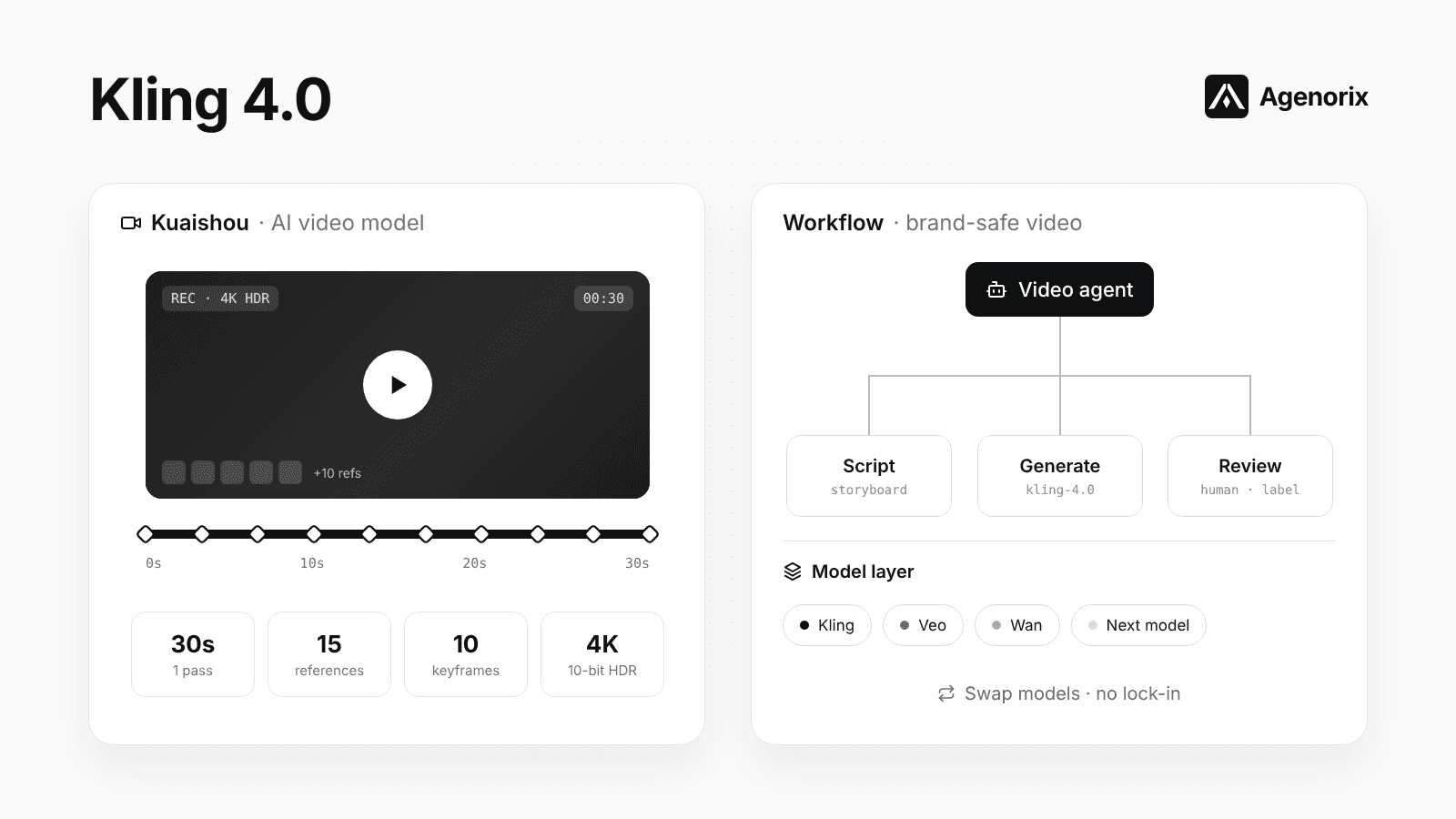
Our last two articles looked at AI agents in the office. But another area of AI is moving just as fast, with a direct impact on marketing, communications and training teams: AI video. In mid-October 2026, Kuaishou officially launched Kling 4.0 worldwide, a release that shows AI video has moved past the "few-second demo clip" stage.
What's new in Kling 4.0?
After the Kling 4.0 Flash preview arrived in late September, Kuaishou brought the full model to international markets in mid-October. The headline upgrades:
30-second videos in a single pass: double the 15-second limit of Kling 3.0, with no need to stitch short clips together.
Up to 15 references: character, product and scene images can be supplied together to keep visuals consistent.
10 keyframes: users set key moments in advance for tighter control over the storyline.
Steadier large-scale motion, plus announced 4K and 10-bit HDR output for professional use. Some sources note that HDR is rolling out gradually by plan.
Not just technology, but a real business
Kling is no longer an experiment. According to Kuaishou's Q2 2026 results, Kling AI generated more than RMB 850 million in revenue for the quarter, up more than 200% year over year. Meanwhile, OpenAI discontinued the Sora app in April and shut down the Sora API at the end of September 2026. The AI video market is shifting fast: today's leading provider may not be around next year.
The Agenorix view: AI video needs a workflow, not just a tool
A 30-second video with consistent characters and products is enough for a short ad, a product explainer or an internal training lesson. But generating one great clip is very different from reliably producing dozens of on-brand videos every month. When we deploy AI video for businesses, we break the job into a workflow coordinated by agents:
Script and storyboard: an agent drafts the script from a brief and proposes the key frames.
Brand asset kit: logos, products, characters and color palettes are standardized into a reference set reused across every video.
Generate and check: the agent produces several options and filters out obvious visual errors before anything reaches a reviewer.
Review and label: a person approves the final cut, and videos are marked as AI-generated in line with company and platform policies.
No single-vendor lock-in: the workflow is decoupled from any one model, so you can switch between Kling, Veo or another model without starting over.
That last point matters more and more. Sora is the clearest example: businesses that built workflows tightly around one model have to rebuild when that model goes away.
Where should businesses start?
Pick one type of video you already make regularly, such as product explainers, how-to videos or weekly social content, and try producing 3 to 5 of them with AI using the workflow above. Compare time, cost and brand consistency against your current process. If you'd like a partner along the way, the Agenorix team is ready to help, and your first consultation is free: get in touch.
Sources: Kling AI (GlobeNewswire release, Oct 16, 2026), Bernama (Oct 15, 2026), Kuaishou Technology (Q2 2026 financial results), SCMP, BigGo Finance.
Share